The SABRENT USB-C & USB-A SD/Micro SD Card Reader review centers on a practical convenience: one compact reader connects to both USB-C and USB-A devices while handling common SD and microSD card formats.
It suits people who move photos, videos, or other files between cameras and computers, provided their device is compatible.
SABRENT Card Reader Review Summary
The quick verdict
2,000+ ratings
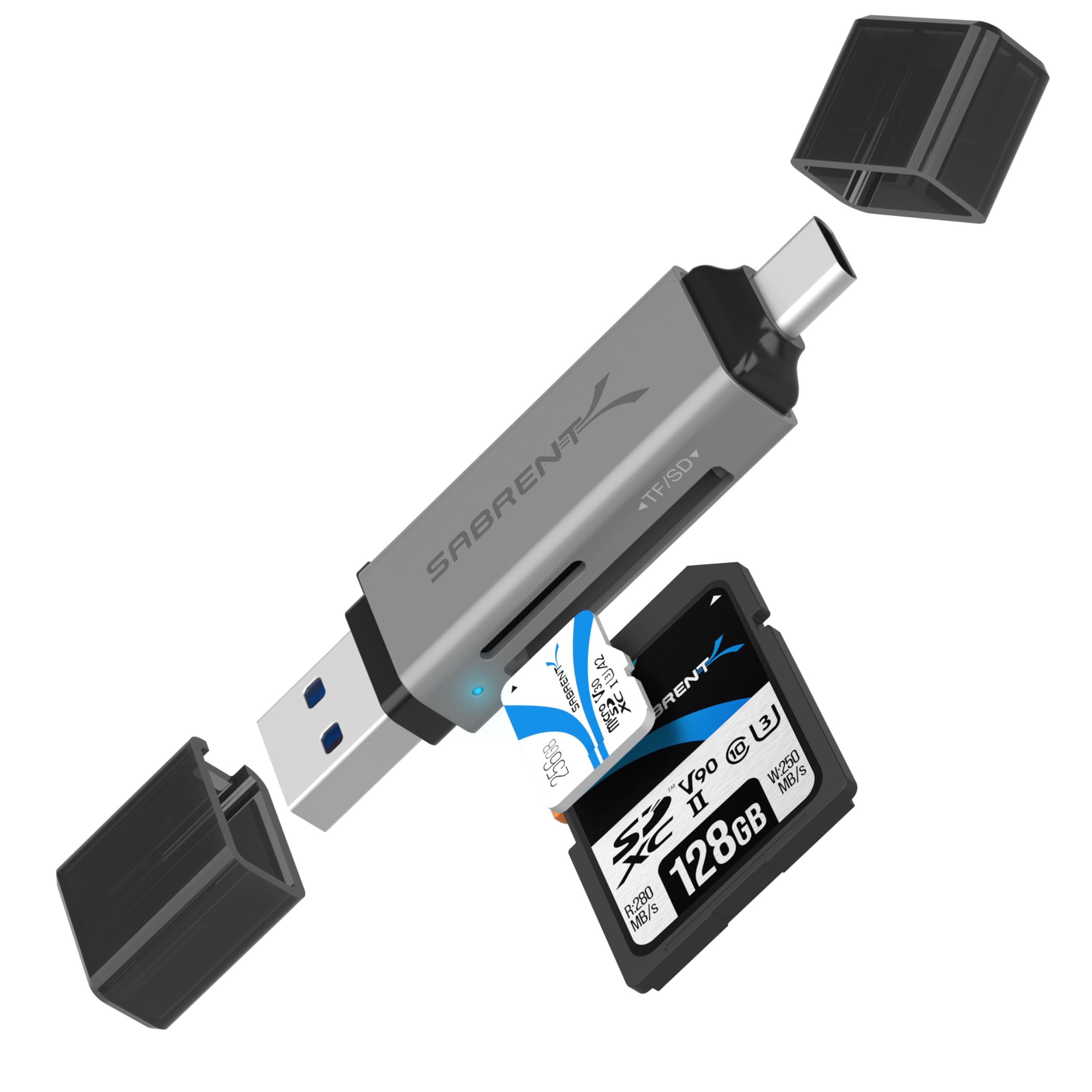
Read Amazon ReviewsSABRENT USB-C & USB-A SD/Micro SD Card Reader
A compact option for transferring files from SD and microSD cards across USB-C and USB-A laptops, PCs, and compatible Android devices.
- USB-C and USB-A connectivity for use with compatible modern and traditional devices.
- Two slots support SD, SDHC, SDXC, microSD, microSDHC, and microSDXC cards.
- USB 3.0 interface supports transfer speeds up to 5Gbps and is backward compatible with USB 2.0.
- Plug-and-play design requires no drivers or software installation.

Pros
- Offers USB-C and USB-A connections in one reader.
- Supports common full-size SD and microSD card formats.
Consider before buying
- The up-to 5Gbps interface speed is a ceiling; actual transfer rates can vary with the card, host, files, and connection.
- Android support depends on the specific device, so compatibility is worth checking before purchase.
Read the full review summary
This reader brings together two card slots and support for both USB-C and USB-A connections, which can simplify transfers between newer and older devices.
Its USB 3.0 interface supports transfer speeds up to 5Gbps and works with USB 2.0 hosts as well, so it can fit into a mix of setups without requiring a separate power supply or software installation.
The strongest fit is someone who wants a small, straightforward reader for SD and microSD cards used in cameras, dash cams, or everyday devices.
Compatibility with Windows, macOS, and supported Android devices broadens its potential uses, but Android compatibility is conditional; check that your particular device supports the reader before relying on it.
The buying factors
SABRENT Card Reader Scorecard
Editorial scores reflect listed features and buyer fit; they are not laboratory measurements or customer ratings.
Device connectivity
USB-C and USB-A connections make it adaptable across newer and traditional ports.
Card format coverage
The two slots support common SD, SDHC, SDXC, microSD, microSDHC, and microSDXC formats.
Transfer interface
USB 3.0 supports speeds up to 5Gbps, with backward compatibility for USB 2.0.
Setup simplicity
Plug-and-play operation requires no drivers or software on compatible devices.
Portability
Its lightweight design and compact form are suited to carrying in a pocket or camera bag.
Platform flexibility
Windows, macOS, and compatible Android devices are supported, with Android use dependent on device compatibility.
Key Features and Specifications of SABRENT Card Reader
- USB-C and USB-A connectivity for use with compatible modern and traditional devices.
- Two slots support SD, SDHC, SDXC, microSD, microSDHC, and microSDXC cards.
- USB 3.0 interface supports transfer speeds up to 5Gbps and is backward compatible with USB 2.0.
- Plug-and-play design requires no drivers or software installation.
- Works with Windows, macOS, and compatible Android devices.
- Compact, lightweight form includes a built-in LED activity indicator.
Pros and Cons of SABRENT Card Reader
Pros
- Offers USB-C and USB-A connections in one reader.
- Supports common full-size SD and microSD card formats.
- USB 3.0 interface provides a higher potential transfer rate than USB 2.0.
- No-driver setup and compact construction suit quick transfers on the go.
Consider before buying
- The up-to 5Gbps interface speed is a ceiling; actual transfer rates can vary with the card, host, files, and connection.
- Android support depends on the specific device, so compatibility is worth checking before purchase.
- The compact design may be easier to misplace than a larger reader kept permanently at a desk.
Who Should Buy SABRENT Card Reader?
Good fit
Consider it if you move files from SD or microSD cards and want a reader that can connect to both USB-C and USB-A ports.
That combination can be useful when your workflow includes a newer laptop and a PC or other device with traditional USB-A ports.
It also makes sense for occasional transfers from cameras, dash cams, or other devices using the listed card formats.
Plug-and-play operation keeps setup simple on supported systems, while the LED activity indicator gives a visible cue when the reader is active.
Before choosing it for an Android workflow, confirm that your specific device supports external card readers. For large transfers, treat the 5Gbps figure as the interface's maximum potential rather than a guaranteed file-copy speed.
Who should skip it
Look elsewhere if you need a reader for card formats beyond the listed SD and microSD families, or if your workflow depends on a particular Android device whose compatibility you have not confirmed.
It may not be the right match if you need guaranteed transfer times: the interface's maximum speed does not establish how quickly a specific card and host will move files.
How the SABRENT Card Reader fits everyday transfers
One reader for two common port types
Having USB-C and USB-A connectivity can reduce the need to keep separate readers for different computers. This is especially useful when transferring files between devices from different generations; check the ports available on your host before buying.
Coverage for SD and microSD workflows
The dual-slot design supports listed full-size SD and microSD formats, including SDHC, SDXC, microSDHC, and microSDXC. That gives it a role in common camera and dash-cam workflows, though card format support alone does not determine transfer speed.
Speed depends on the whole setup
USB 3.0 supports speeds up to 5Gbps, and USB 2.0 hosts remain compatible.
The actual time needed for a transfer depends on the card and connected device, so buyers moving large video files should consider their whole setup rather than the interface figure alone.
A simple portable tool
No drivers or software are required on compatible systems, and the compact, lightweight body is easy to carry with a laptop or camera gear. The built-in LED activity indicator can help show when the reader is in use.
Alternatives to SABRENT Card Reader
USB charging alternative
10,000+ ratings
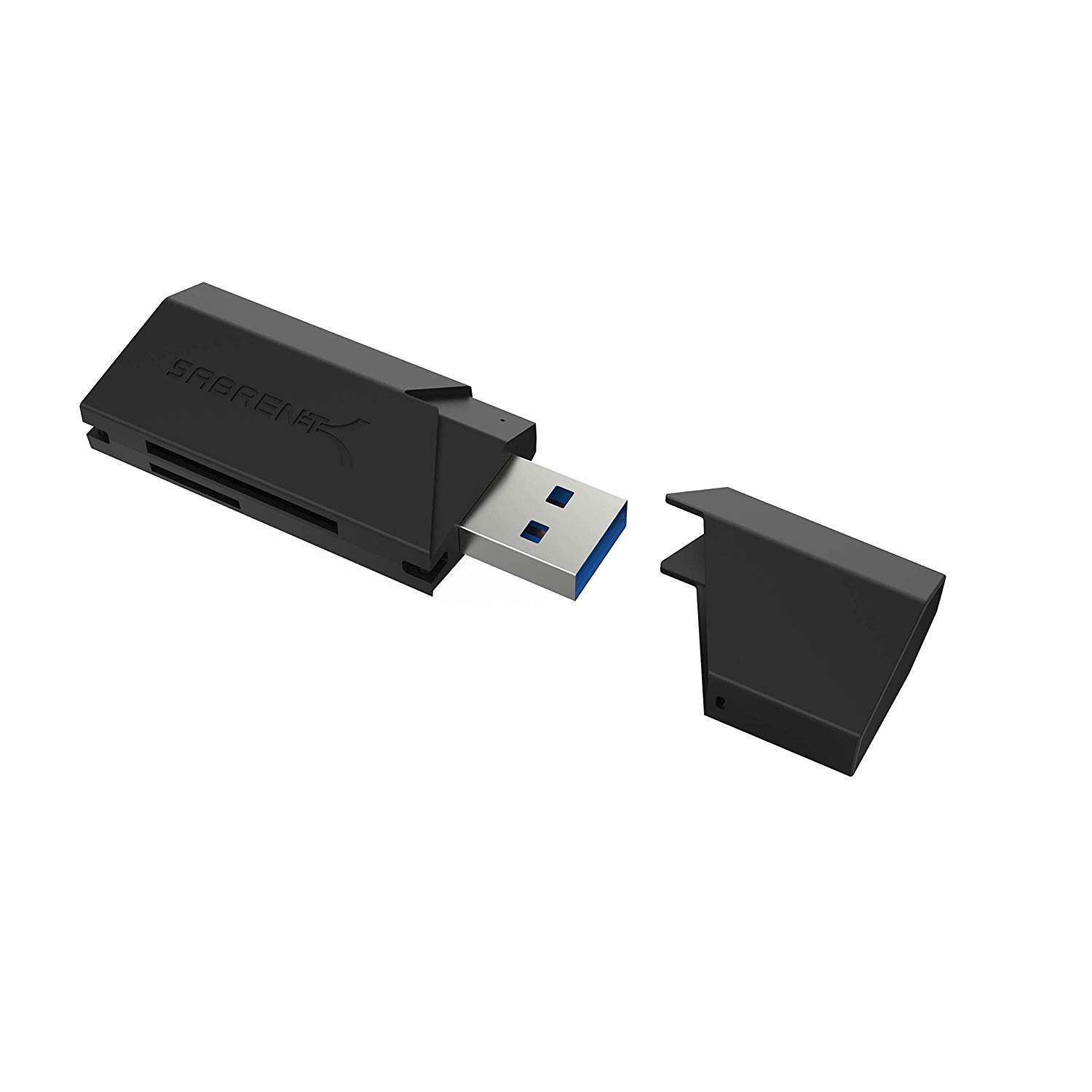
Read Amazon ReviewsSABRENT SuperSpeed 2-Slot USB 3.0 Card Reader (CR-UMSS)
Choose the USB-C & USB-A model when having both connector types is useful for your devices.
Consider the SuperSpeed reader if its listed card coverage, including MMC and T-Flash, better matches your cards and your host connection suits its design.
- The SuperSpeed reader supports SD, SDHC, SDXC, MMC, microSD, and T-Flash cards, uses USB 3.0 with USB 2.0 host compatibility, and is powered through its USB port.
- The USB-C & USB-A reader combines both connector types and supports SD and microSD formats, including SDXC and microSDXC.
Is SABRENT Card Reader Worth It?
The SABRENT USB-C & USB-A SD/Micro SD Card Reader is worth considering for routine file transfers when you want broad support for common SD and microSD formats in a compact, plug-and-play reader.
Its two connector types make it especially practical across devices with different ports.
Check Android compatibility with your particular device, and keep expectations for transfer times grounded in the card and host as well as the reader's up-to 5Gbps interface.
If those fit your setup, this is a straightforward reader for moving files between cards and compatible computers.
Your review at a glance
2,000+ ratings
Read Amazon ReviewsSABRENT USB-C & USB-A SD/Micro SD Card Reader
A compact option for transferring files from SD and microSD cards across USB-C and USB-A laptops, PCs, and compatible Android devices.
- USB-C and USB-A connectivity for use with compatible modern and traditional devices.
- Two slots support SD, SDHC, SDXC, microSD, microSDHC, and microSDXC cards.
- USB 3.0 interface supports transfer speeds up to 5Gbps and is backward compatible with USB 2.0.
- Plug-and-play design requires no drivers or software installation.